There is a specific kind of culinary magic that happens when crisp, hydrating vegetables meet the earthy protein of legumes and the salty punch of sheep’s milk cheese. This cucumber chickpea feta salad is a masterclass in texture and vibrant color, designed to be assembled in just ten minutes without ever turning on the stove.
Inspired by the sun-drenched flavors of the Greek coast, this salad is defined by its glistening lemon-herb vinaigrette and the contrast between deep green English cucumber skins and golden-hued chickpeas. It is the kind of dish that looks as if it were plucked straight from a high-end Mediterranean bistro, yet it relies on simple, wholesome pantry staples.
Whether you are looking for a rapid weekday lunch or a show-stopping side for your next backyard gathering, this recipe delivers high-impact flavor with minimal effort. Let’s dive into how to achieve that perfect glossy finish and the ideal crunch that makes this dish an instant favorite.
Why You Will Love This Vibrant Mediterranean Salad
- Structural Integrity: Unlike leaf-based salads, this cucumber chickpea feta salad maintains its crunch for hours, making it the perfect candidate for meal prep or picnics.
- Textural Contrast: You get the snap of the English cucumber, the creamy bite of Greek feta, and the firm, satisfying chew of the chickpeas in every single forkful.
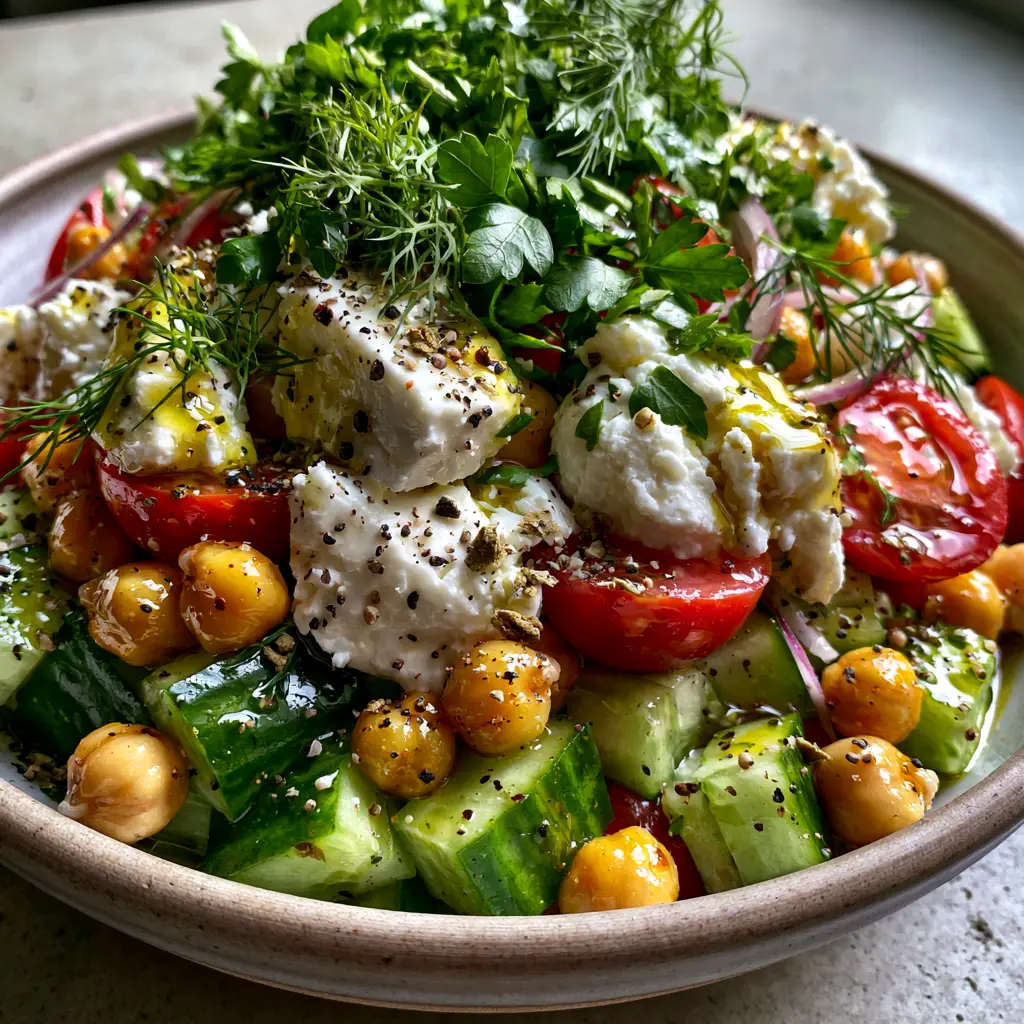
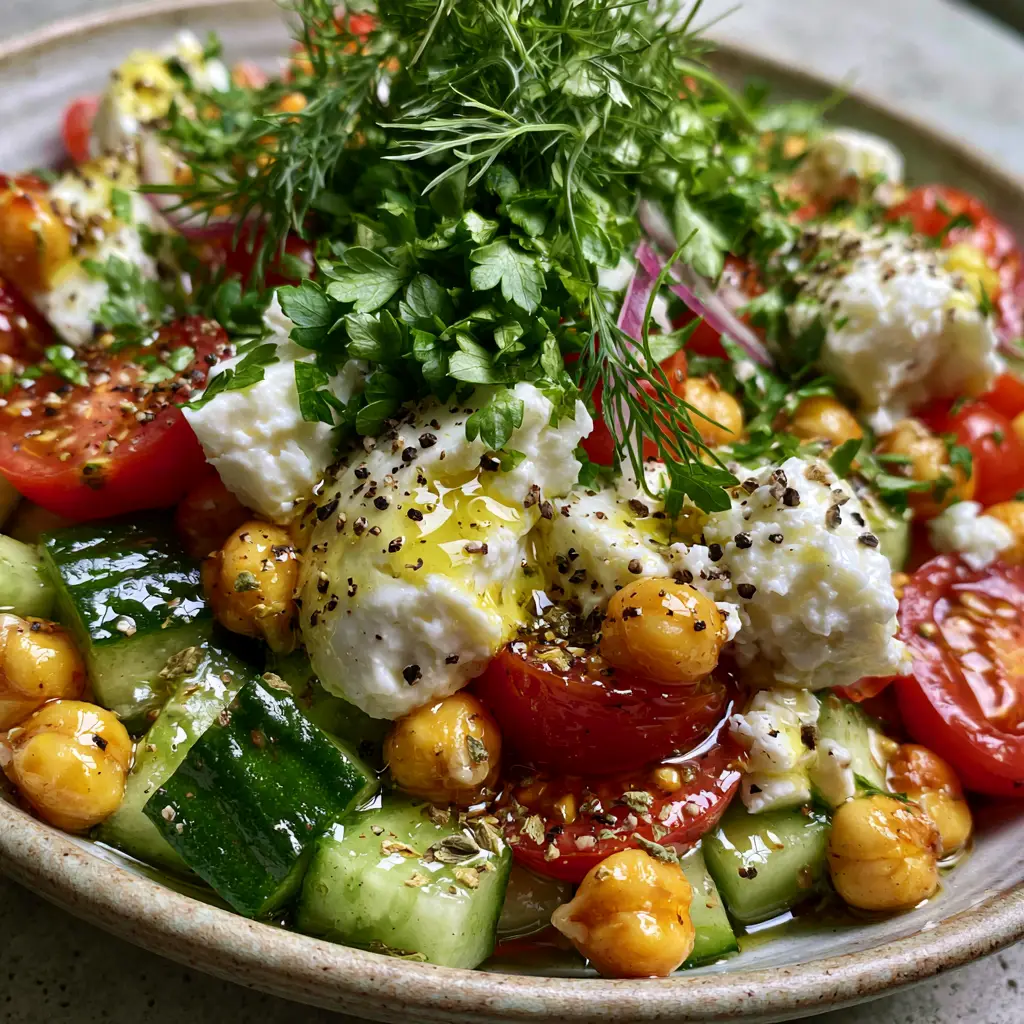
- Visual Brilliance: With bright red cherry tomatoes, purple-tinged red onions, and a mountain of fresh green herbs, this dish is a literal rainbow in a stoneware bowl.
- Nutrient Dense: Packed with plant-based protein, healthy fats from extra virgin olive oil, and a wealth of vitamins from fresh herbs and citrus.
The Vibrant Mediterranean Pantry List
English Cucumber (1 Large / approx. 300g): I specifically use English cucumbers because their skins are thin and tender, providing a deep green visual contrast without the bitterness of standard slicing cucumbers. There is no need to peel them; the skin provides essential structure and color.
Canned Chickpeas (15oz / 425g can): Also known as garbanzo beans, these provide the “golden-hued” base of the salad. Ensure they are thoroughly rinsed and patted dry to allow the dressing to cling to their surface rather than sliding off.
Greek Feta Cheese (1 cup / 150g): Seek out feta stored in brine for the creamiest texture. Instead of buying pre-crumbled cheese, buy a block and break it into large, irregular crumbles to achieve that “artisan” look and superior mouthfeel.
Cherry Tomatoes (1 cup / 150g): Halved cherry tomatoes provide bursts of acidity and sweetness. Their juicy interiors contribute to the natural dressing that forms at the bottom of the bowl.
Red Onion (1/4 small onion): Thin slivers of red onion provide a sharp, pungent bite that cuts through the richness of the cheese. Soaking them in cold water for 5 minutes before adding can mellow their intensity if you prefer a milder flavor.
Fresh Flat-Leaf Parsley & Feathery Dill (1/2 cup combined): These are not just garnishes; they are foundational flavor components. The parsley offers a clean, peppery note, while the dill provides a signature Mediterranean aroma.
Extra Virgin Olive Oil (3 tbsp / 45ml): This foundational invisible ingredient is what creates the “glistening” effect described in the visual prompt. Use the highest quality oil you have for the best flavor.
Fresh Lemon Juice (2 tbsp / 30ml): The acid component that brightens the entire dish and helps macerate the onions slightly. Always use fresh juice over bottled for that hit of citrus zest.
Dried Oregano & Cracked Black Pepper (1 tsp each): These dried spices cling to the wet ingredients, creating visible particles that signal deep, herbal seasoning to the palate.
Kosher Salt (1/2 tsp / 3g): A crucial invisible ingredient that draws out the natural juices of the cucumber and tomatoes, helping to meld the vinaigrette with the vegetable water.
Essential Tools for an Artisan Presentation
To achieve the look of a professional handheld smartphone photo, you need the right vessels. A shallow, wide artisan stoneware bowl is preferred over a deep mixing bowl, as it allows the ingredients to be layered rather than buried.
You will also need a sharp chef’s knife to create those precise “thin slivers” of red onion and cleanly diced cucumber. A small glass jar is excellent for emulsifying the lemon-herb vinaigrette, ensuring it arrives at the salad in a perfectly glossy state.
Mastering the 10-Minute Mediterranean Assembly
Preparing the Base Textures
Start by dicing your English cucumber into 1/2-inch (1.25cm) cubes. Keep the skin on to ensure those “deep green skins” are visible against the lighter ingredients. Place the cucumber in your wide stoneware bowl.
Drain the chickpeas into a colander and rinse them under cold water until the foam disappears. Pat them very dry with a clean kitchen towel. This step is vital; moisture is the enemy of a “glossy” salad, as it dilutes the oil. Add the golden chickpeas to the bowl.
Building the Aromatics and Color
Slice the cherry tomatoes in half vertically and add them to the mixture. Shave the red onion into paper-thin slivers. If you want to elevate your summer salad game, remember that consistent knife cuts are the secret to a professional-looking dish.
Roughly chop the flat-leaf parsley and pull the feathery fronds of dill away from their woody stems. Do not over-process the herbs; you want a “mountain” of fresh greens that looks rustic and hand-torn.
Emulsifying the Lemon-Herb Vinaigrette
In a small jar or bowl, whisk together the extra virgin olive oil, fresh lemon juice, dried oregano, salt, and plenty of cracked black pepper. Whisk vigorously until the oil and lemon juice have unified into a thick, translucent gold liquid. This emulsification is what ensures the dressing “clings” to the chickpeas rather than pooling at the bottom.
The Final Layering and Plating
Pour the dressing over the vegetables and chickpeas and toss gently. Now, add the large crumbles of Greek feta. We add the feta last and toss lightly to ensure the cheese stays in creamy white chunks rather than dissolving into the dressing and turning the whole salad cloudy.
Finish by piling the extra herbs on top and adding one final crack of black pepper. The result should be a glistening, vibrant bowl that looks identical to a high-end food photography set.
Expert Tips for the Perfect Cucumber Chickpea Feta Salad
- The Salting Rule: Only salt the salad immediately before serving. Salt draws water out of cucumbers; if it sits too long, the salad will become watery instead of glossy.
- Temperature Matters: While the chickpeas can be room temperature, the cucumber and tomatoes should be chilled. The contrast in temperature makes the salad incredibly refreshing.
- Feta Choice: If you can find it, use Sheep’s Milk Feta. It has a higher fat content and a tangier profile than cow’s milk versions, providing that “creamy crumble” described in our blueprint.
- Herb Preservation: If you are making this ahead, keep the parsley and dill in a separate container and fold them in at the very last second to prevent wilting.
Storage and Meal Prep Strategy
This cucumber chickpea feta salad is best enjoyed within 30 minutes of assembly to maximize the “crisp” factor of the English cucumbers. However, if you are meal prepping, you can combine the chickpeas, onions, and dressing in a container and let them marinate.
Store the diced cucumbers and tomatoes in a separate airtight container. When you are ready to eat, simply combine the two containers and top with fresh herbs and feta. This method prevents the vegetables from losing their structural integrity in the fridge.
Do not freeze this salad. The high water content of the cucumbers and the delicate texture of the feta do not survive the freezing and thawing process.
What to Serve With This Mediterranean Masterpiece
This salad is substantial enough to stand alone as a light lunch, but it also pairs beautifully with grilled proteins. It serves as a refreshing palate cleanser alongside a hearty chicken bacon ranch dish or a smoky grilled steak.
If you are hosting a summer spread, consider serving this alongside a savory bacon corn salad to offer guests a variety of textures. It also acts as a great vegetarian alternative when you are serving meat-heavy appetizers at a party.
For a complete Mediterranean feast, serve this salad with warm pita bread, a side of hummus, and some sweet ricotta bites for dessert.
Frequently Asked Questions
Absolutely! Grilled chicken, shrimp, or even canned tuna pair wonderfully with the lemon-herb profile of this Mediterranean base.
Yes, but you should peel them partially and remove the seeds, as regular slicing cucumbers have thicker, more bitter skins and a higher water content which can make the salad soggy.
The key is to salt the salad right before serving and ensure your chickpeas are patted completely dry. If you are making it in advance, store the dressing separately.
Yes, it is high in fiber and plant-based protein while remaining relatively low in calories, making it a very satiating option for a healthy diet.
Buy a block of Greek feta in brine and use your hands to break it into large, irregular chunks. Pre-crumbled feta is often coated in anti-caking agents that affect the creamy texture.
The 10-Minute Cucumber Chickpea Feta Salad Recipe
Cucumber Chickpea Feta Salad: The Ultimate 10-Minute Mediterranean Recipe
Ingredients
Equipment
Method
- Dice the English cucumber into 1/2-inch cubes, keeping the skin on. Drain and rinse the chickpeas until no foam remains, then pat them completely dry with a towel to ensure a golden, glossy finish.
- Halve the cherry tomatoes and thinly sliver the red onion. Place the cucumbers, chickpeas, tomatoes, and onions into a wide, shallow stoneware bowl.
- In a small jar, combine olive oil, lemon juice, dried oregano, salt, and black pepper. Shake vigorously until the mixture is thick and emulsified.
- Pour the dressing over the vegetables and toss to coat every piece. Gently fold in the large feta crumbles and top with a mountain of fresh chopped parsley and dill.
Notes
Add the feta last to keep the white crumbles distinct and creamy.
Closing & Call to Action
This cucumber chickpea feta salad proves that you don’t need hours in the kitchen to create a dish that is both nutritionally dense and visually stunning. By focusing on the quality of your olive oil and the freshness of your herbs, you can transform humble pantry chickpeas into a gourmet experience.
If you made this recipe and loved the glossy lemon-herb finish, please leave a comment and a star rating below! Don’t forget to follow me and share your beautiful creations on Pinterest so I can see your artisan stoneware bowls in action!