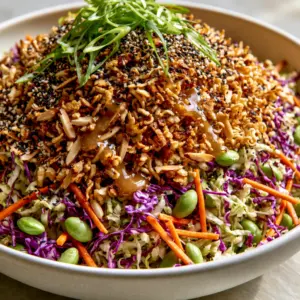
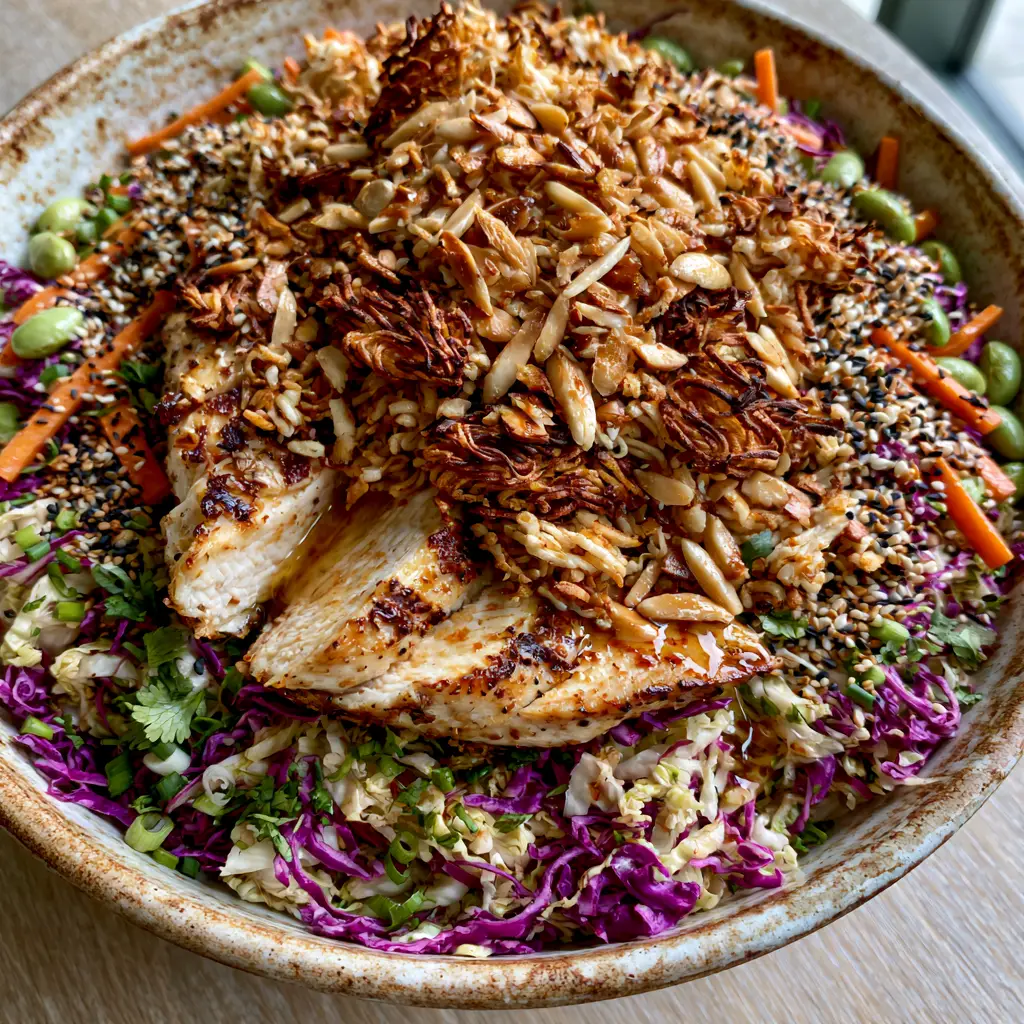
There is nothing quite like the satisfying “crunch” of a perfectly constructed Ramen noodle chicken salad. Imagine a rustic ceramic bowl overflowing with vibrant textures: finely shredded napa and purple cabbage, golden-seared chicken, and clusters of deeply toasted, buttery ramen noodles. This isn’t just a side dish; it is a full-sensory experience designed to catch the light and the appetite of everyone at the table.
Inspired by the bright, natural light of a summer kitchen, this recipe captures the essence of fresh, unedited culinary beauty. The honey-amber ginger dressing clings to every matchstick carrot and edamame bean, providing a glossy finish that makes the colors pop without ever becoming soggy. Whether you are looking for a quick lunch or a impressive dinner, this salad delivers on every promise of flavor and texture.
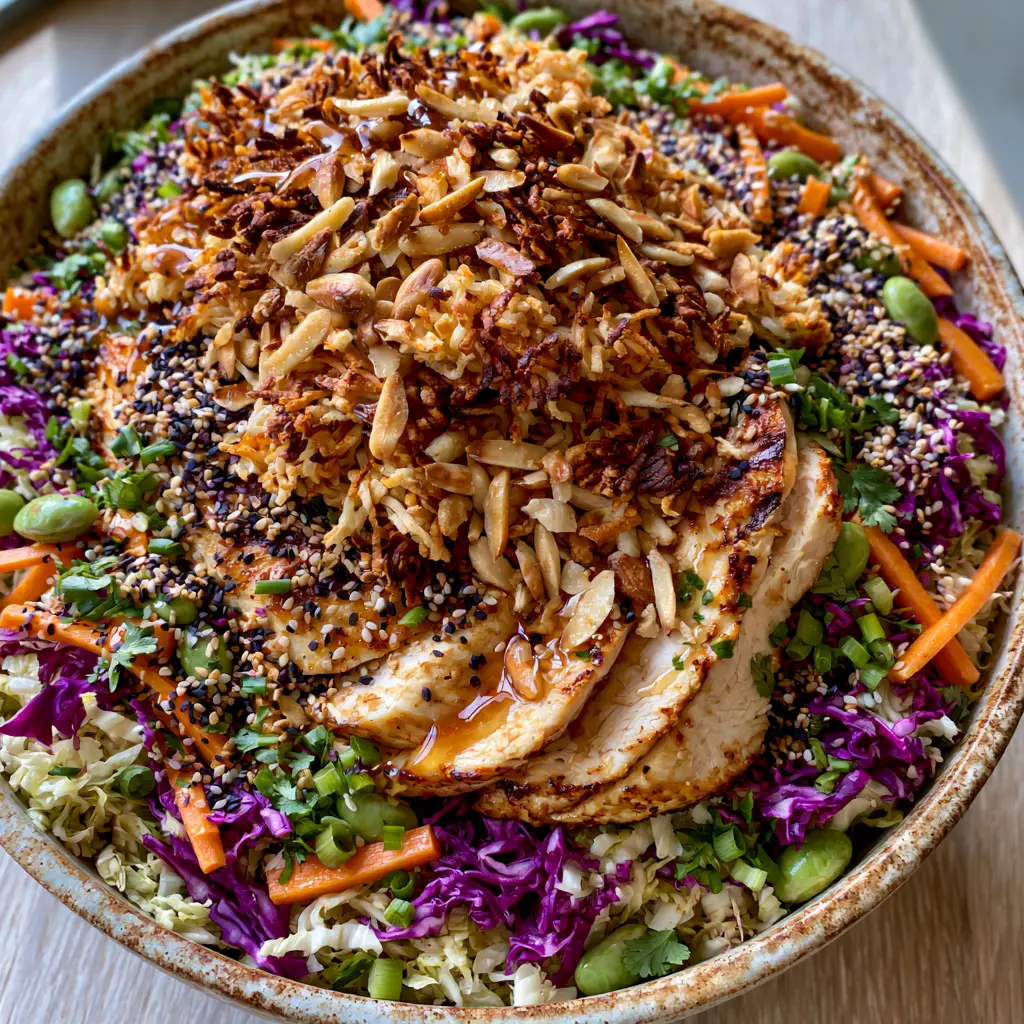
The Crisp and Colorful Architecture of This Vibrant Bowl
- Unbeatable Texture: By toasting the dry ramen noodles and slivered almonds until they reach a deep golden-brown, we create a nutty, shattered-glass crunch that contrasts beautifully with the tender chicken.
- Visual Vibrancy: The combination of bright orange matchstick carrots, neon-green edamame, and deep purple cabbage ensures this dish is as beautiful to look at as it is to eat.
- Professional Searing: We achieve visible grill marks and a savory crust on the chicken breast to provide a smoky depth that anchors the lighter vegetable components.
- Glossy Umami Dressing: Our ginger-soy vinaigrette is carefully balanced with honey to create that “amber glow” visual while delivering a punch of acidity and salt.
The Pantry Staples for Your Ginger-Soy Vinaigrette and Base
Napa and Purple Cabbage: Use a sharp knife or a mandoline to achieve that “finely shredded” look. These varieties provide the structural base that holds up to the dressing without wilting immediately.
Chicken Breast: To achieve the “golden-seared” look from our visual blueprint, ensure the chicken is patted dry before hitting a hot, oiled skillet. This creates those distinct, appetizing grill marks.
Dry Ramen Noodles: Discard the flavor packet and focus on the noodles. Once broken into clusters and toasted with a bit of oil, they transform into a gourmet topping that rivals any crouton.
Slivered Almonds: These provide a secondary layer of crunch. Toasting them alongside the noodles intensifies their natural oils and deepens the overall flavor profile of the salad.
Matchstick Carrots and Edamame: These are your “pops of color.” The edamame adds plant-based protein and a buttery bite, while the carrots provide a natural sweetness.
The Glossy Dressing: A blend of soy sauce, rice vinegar, fresh grated ginger, garlic, and honey. The honey is the secret to the “glossy, honey-amber” appearance seen in professional food photography.
Fresh Herbs and Seeds: Chopped scallions and cilantro provide the “bright green” highlights, while a generous dusting of both black and white sesame seeds adds the final professional flourish.
Essential Tools for Culinary Success
To recreate the rustic, handheld smartphone photo aesthetic, you will need a large ceramic salad bowl with a wide rim. A high-quality cast-iron skillet or grill pan is necessary to achieve the deep brown sear on the chicken breast. Finally, use a small glass jar to emulsify the dressing vigorously, ensuring it reaches that perfectly thick, drizzlable consistency.
Mastering the Crunch: Step-by-Step Culinary Guidance
1. Searing the Perfect Chicken Breast
Start by seasoning 1 lb (450g) of chicken breast with salt and black pepper. Heat 1 tbsp (15ml) of neutral oil in a skillet over medium-high heat. Place the chicken in the pan and leave it undisturbed for 5-6 minutes until a deep golden-brown crust forms. Flip and cook for another 4-5 minutes until the internal temperature reaches 165°F (74°C). Set aside to rest before slicing into strips to reveal the juicy interior.
2. Achieving the Deeply Golden Toasted Crunch
Preheat your oven to 350°F (175°C). Break two blocks of dry ramen noodles (approx. 6 oz/170g) into small clusters. Spread them on a baking sheet with 1/2 cup (50g) slivered almonds and drizzle with 2 tbsp (30ml) melted butter or oil. Bake for 8-10 minutes, tossing halfway through, until they are deeply golden-brown and fragrant. This step is critical for the “catch the light” effect mentioned in our visual prompt.
3. Preparing the Cabbage Base and Vegetables
In your large ceramic bowl, combine 4 cups (300g) shredded napa cabbage and 2 cups (150g) shredded purple cabbage. Add 1 cup (150g) matchstick carrots and 1 cup (155g) shelled edamame beans. Use your hands to toss these together; the friction helps slightly soften the cabbage, making it easier to eat while retaining its structural integrity.
4. Emulsifying the Honey-Amber Dressing
In a jar, whisk together 1/4 cup (60ml) soy sauce, 1/4 cup (60ml) rice vinegar, 2 tbsp (30ml) honey, 1 tbsp (6g) freshly grated ginger, and 1/3 cup (80ml) neutral oil. Shake until the dressing is glossy and thick. This vinaigrette should look like liquid amber when poured.
Expert Tips for the Ultimate Salad Texture
- The “Soggy” Defense: Only add the dressing and toasted ramen noodles immediately before serving. This ensures the noodles retain their “shattered-glass” crunch.
- Rest the Meat: Never slice your chicken immediately after cooking. Letting it rest for 5 minutes ensures the juices stay inside the meat rather than running out and watering down your salad base.
- Herb Freshness: Store your cilantro and scallions in a glass of water in the fridge until the very last second to ensure those “pops of bright green” look as vibrant as possible.
- Seed Contrast: Using both black and white sesame seeds isn’t just for flavor; the visual contrast against the orange carrots and purple cabbage is what makes this dish look professional.
Storage and Meal Prep Advice
If you are planning to enjoy this Ramen noodle chicken salad for lunch throughout the week, store the cabbage mix, chicken, and dressing in separate containers. The toasted ramen and almonds should be kept in a sealed bag at room temperature to maintain their crispness. When stored properly, the vegetable base will stay fresh for up to 4 days in the refrigerator.
What to Serve With This Crunchy Salad
This salad is a powerhouse on its own, but it also pairs beautifully with other Asian-inspired dishes. If you want a variety of textures on your table, consider serving this alongside a warm sesame noodle salad or a refreshing cucumber chickpea feta salad for a fusion feast.
For those busy weekdays, this recipe fits perfectly into your rotation of back-to-school dinner ideas because it requires minimal actual “cooking” time once the chicken and noodles are prepped. If you’re looking for a lighter, no-heat option for the height of summer, you might also enjoy our no-cook noodle salad.
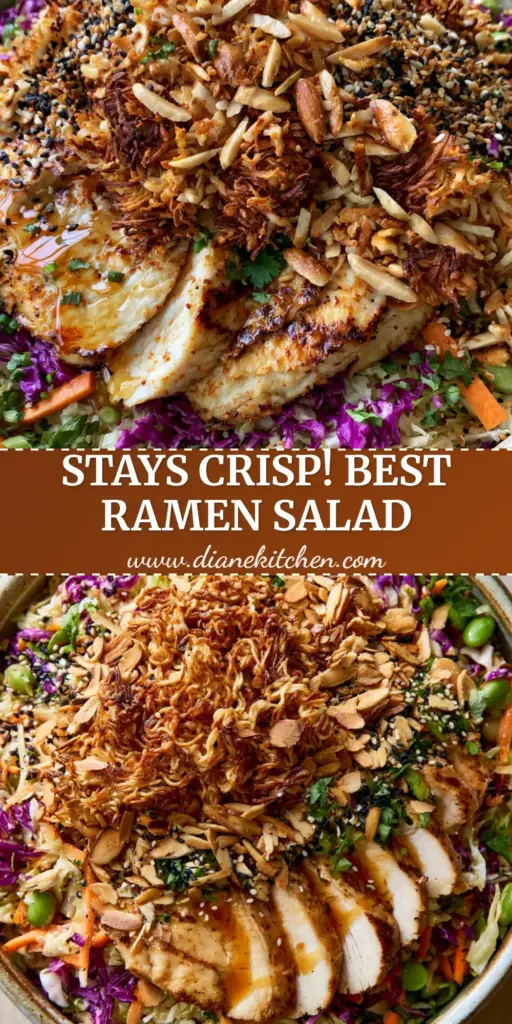
The Complete Ramen Noodle Chicken Salad Recipe
Ramen Noodle Chicken Salad: The Ultimate Crunchy Asian Slaw with Ginger Soy Dressing
Ingredients
Equipment
Method
- Season chicken and sear in a hot skillet for 5-6 minutes per side until golden-brown grill marks appear and internal temp is 165°F.
- Toss broken ramen and almonds with oil; bake at 350°F (175°C) for 8-10 minutes until deeply golden.
- Combine shredded cabbages, carrots, edamame, and sliced chicken in a large bowl. Drizzle with dressing and top with toasted ramen, sesame seeds, and fresh herbs.
Notes
Use a mandoline for the cabbage to get restaurant-quality thin ribbons.
Closing & Call to Action
This Ramen noodle chicken salad is the perfect marriage of culinary science and visual artistry. With its deep-golden crunches, vibrant cabbage ribbons, and glossy ginger dressing, it’s a recipe that tastes even better than it looks. We would love to see your recreations! Please leave a comment below and let us know how your toasted ramen turned out. Don’t forget to share this recipe to your favorite boards on Pinterest so you never lose this crunchy classic!
Yes, but keep the components separate. Store the shredded cabbage and chicken in the fridge, but keep the toasted ramen noodles at room temperature in an airtight bag to maintain their crunch.
While you can, it’s often very high in sodium and artificial flavors. Our fresh ginger-soy dressing provides a much more sophisticated, gourmet flavor profile using real ingredients.
The secret is to toss the dry clusters in a little oil or butter and bake them at 350°F (175°C) until they are deeply golden-brown. This develops a nutty flavor and a superior ‘shattered-glass’ texture.
This salad is packed with nutrient-dense vegetables like napa cabbage, carrots, and edamame. To make it even lighter, you can reduce the amount of oil in the dressing or use grilled chicken instead of seared.
If napa cabbage isn’t available, a mix of green cabbage and shredded bok choy works well as a sturdy substitute that still offers a great crunch.